I've finally implemented a concept that has been on the back of my
mind for some time. I call it pseudoGrey. It is a method to encode
more than 8 bits of greyscale within a 24-bit color image. Using the
technique, exactly 1,786 levels of grey can be encoded and decoded. The
algorithm borrows from the concept of luma, in that the "plusses" map
roughly to the luma weights of the three color components.
To use this technique, you begin with a 12-bit greyscale number.
The base 8-bit value for each rgb element is the 12-bit value right-shifted
by four. Then 1 is added to none, one, or two of the components by
examining the low-order nibble of input. On:
2.. 4 -> blue + 1
5.. 6 -> red + 1
7.. 8 -> red + 1, blue + 1
9..10 -> green + 1
11..13 -> green + 1, blue + 1
14..15 -> green + 1, red + 1
I don't think anyone can actually see the difference between 256 and
1786 levels of grey. However, without degrading the color image, you
preserve analytical detail which would otherwise be lost. Of course,
you need to have started with at least 512 levels of grey to get any
benefit. Film and many scanners do provide data sources that might take
advantage of this technique.
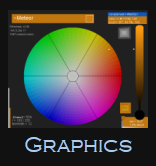
To see an implementation, visit the
SIHwheel. The source code
for the applet links from there. The color wheel begins
"non-augmented", which means there are 4096 slots available for greys.
If you click in the center of the wheel, the intensity bar is mapped to
pseudoGrey. If you have a 24-bit display and screen-peeker program, you
will be able to verify the pseudoGrey encoding. If you augment the
color set (by having three or more hue domains in their extra-hue mode),
the color wheel won't use more than 8-bit grey.
The 16-bit SIH colorspace always has at least 256 true grey levels.
February 2013 update: Extended PseudoGrey!
3110 unique levels!!
Read all about it!!!
This page used to contain source code for a small java console program.
Frankly it took up too much space, and most people weren't interested in it
anyway. It still resides in plain text form here, though.
The program tests two getPseudoGrey() methods. A third method,
isPseudoGrey(), provides a test to determine whether a color should be
interpreted as grey. Calculations use 12-bit greyscale.
Dave Wyble of the
Munsell Color Science Laboratory
has let me know that there has already been a hardware implementation of this
concept:
-
Tyler C.W., Chan H., Liu L., McBride B. & Kontsevich L.L. (1992)
- Bit-stealing:
How to get 1786 or more grey levels from an 8-bit color monitor
- Proc. SPIE
#1666, 351-364
G. Adam Stanislav has implemented
pseudogrey into his Pixie Dust
Photoshop plugin. His site includes information about redheads, but he
also offers a lot of photography and plugin information.
Start with the Atelier link for the latter sort.
The photographer Alex Wilson
independently came up with the idea of pseuodogrey. He implemented it as
a perl script. It accepts a 16-bit raw grey photoshop file, and
converts it to a raw 24-bit "color" file using the pseudogrey algorithm.
He has allowed me to host the script
here.
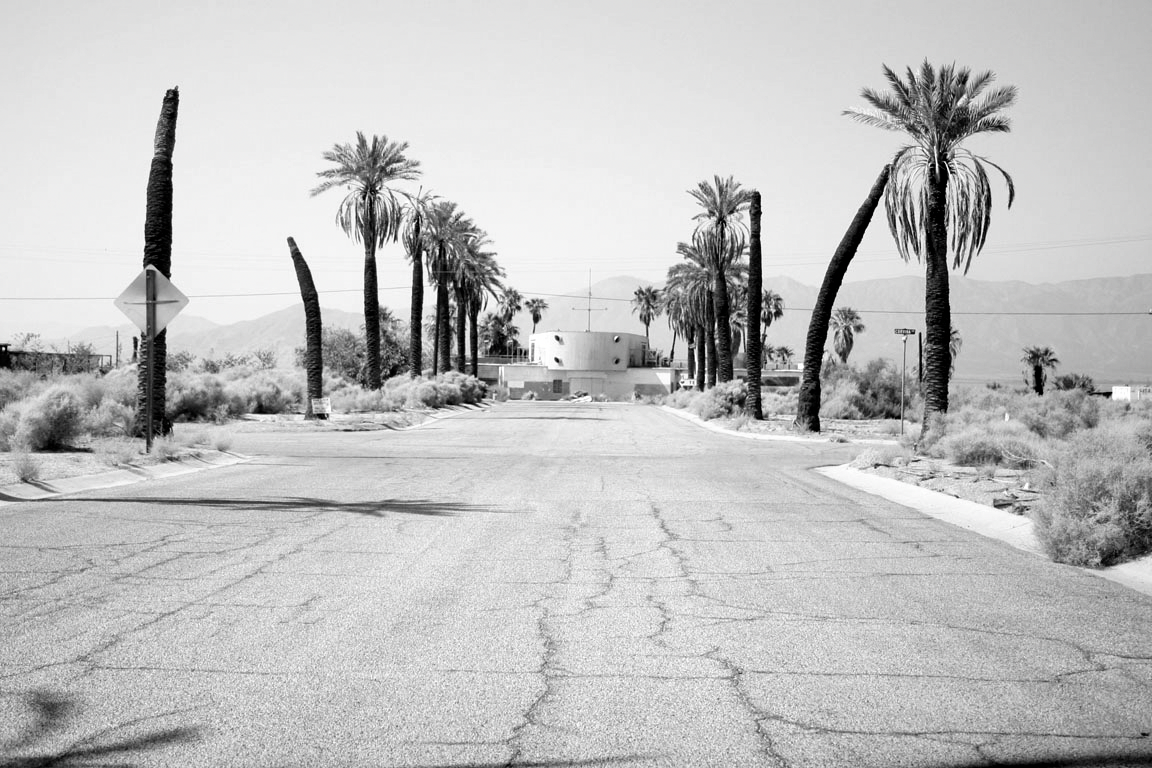
Lyle J. Kroll has posted a tutorial,
True Pseudogrey in GIMP. Check out the
1152x768 image
he created.
Pat David later posted a
True
Pseudogrey in GIMP article to his blog. Therein he offers a "script-fu"
implementation and explanation of Lyle's manual technique.
For those more interested in viewing colors than greys, visit
Roedy Green's Colour Page.
(Each turquoise ball links to a full page of colors.)
It is part of the amazing
Java & Internet Glossary.
Translations of this Page
Armenian
by Karen Mgebrova
Please let me know about other related information.
Thank you.